
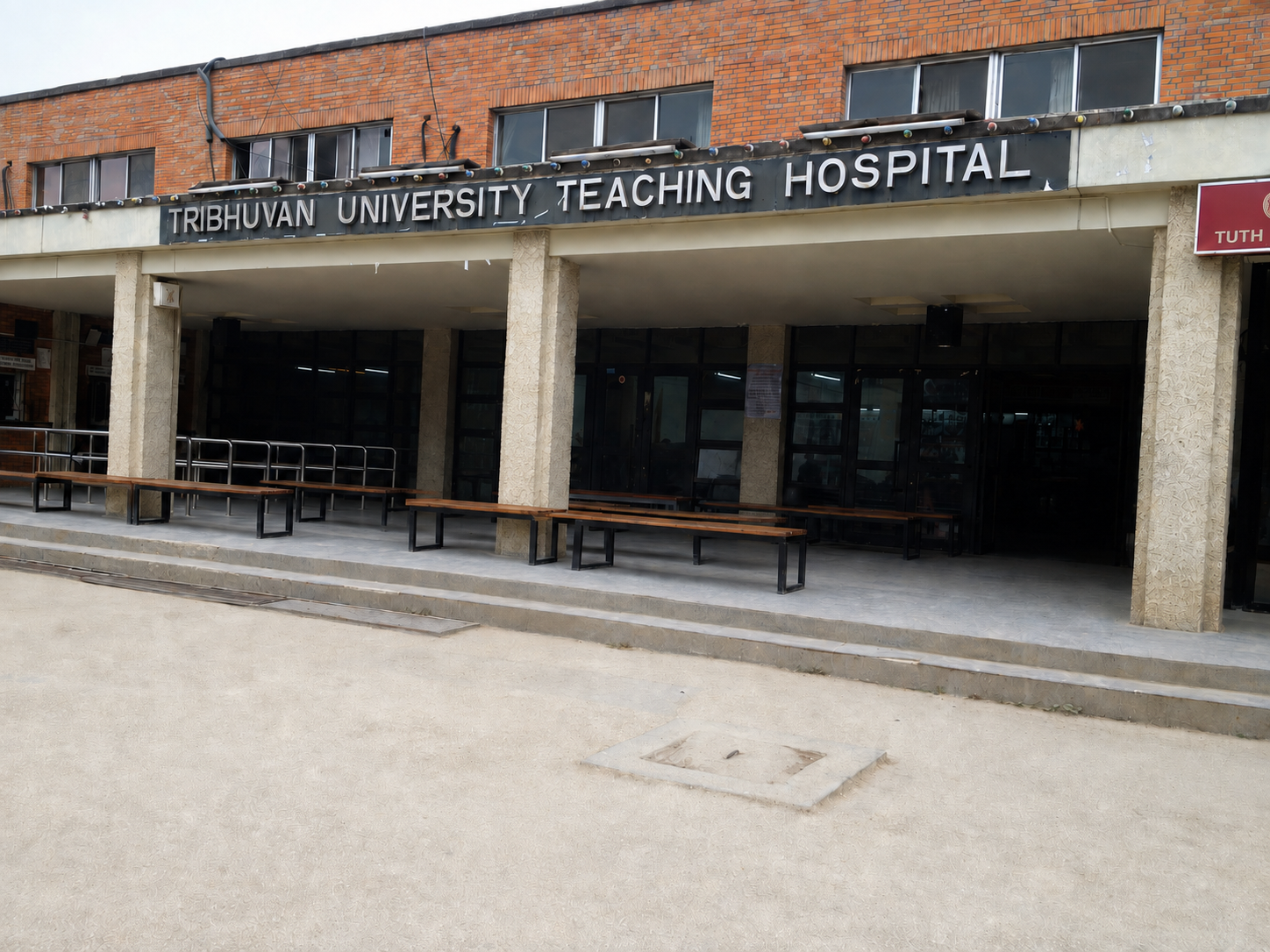
Medical Elective at TU Teaching Hospital, Kathmandu
Gain Clinical Exposure at One of Nepal’s Leading Teaching Hospitals
The Medical Elective at TU Teaching Hospital, Kathmandu offers international medical students an opportunity to observe clinical practice, experience Nepal’s healthcare system, and learn alongside local doctors, professors, residents, and medical students.
Tribhuvan University Teaching Hospital (TU Teaching Hospital), located in Maharajgunj, Kathmandu, is a major teaching and referral hospital connected with the Institute of Medicine, Tribhuvan University. The hospital receives patients from Kathmandu as well as referrals from different parts of Nepal, providing medical students with exposure to a wide variety of clinical conditions and specialties.
Gap Bridge Nepal coordinates the elective placement, assists with the application process, provides orientation and accommodation arrangements, and supports students throughout their stay in Nepal.
Who Is This Program For?
This elective is designed primarily for medical students who have already entered the clinical stage of their medical education.
Applicants should normally have completed their basic pre-clinical studies and started clinical rotations.
Required Qualifications
Applicants should:
- Be currently enrolled in a recognised medical school or university
- Have started their clinical years of medical study
- Normally be in at least the third year of medical school or equivalent
- Have basic clinical knowledge and experience with patient observation
- Be able to communicate effectively in English
- Be willing to follow hospital rules and professional standards
- Respect patient confidentiality and Nepalese culture
- Have appropriate travel and medical insurance
Students who are still entirely within their pre-clinical years may contact Gap Bridge Nepal, but acceptance will depend on the hospital and the nature of the requested placement.
Final-year medical students are particularly well suited to this program.
Clinical Departments
TU Teaching Hospital offers a broad range of specialties. Placement availability varies according to hospital capacity, university schedules, and departmental approval.
Students may request areas such as:
- Internal Medicine
- General Surgery
- Emergency Medicine
- Paediatrics
- Obstetrics and Gynaecology
- Orthopaedics
- ENT
- Dermatology
- Psychiatry
- Anaesthesiology
- Radiology
- Ophthalmology
- Cardiology-related services
- Neurology-related services
- Intensive Care
- Outpatient Services
- Other specialist departments where available
Applicants should indicate their first and second department preferences when applying.
Gap Bridge Nepal will make every effort to arrange the preferred department, but a particular specialty cannot be guaranteed until the hospital confirms the placement.
What Will Students Do?
The elective is primarily an observational clinical-learning experience.
Depending on the department, students may have opportunities to:
- Join morning ward rounds
- Shadow consultants, professors, residents, and medical officers
- Observe outpatient consultations
- Attend clinical discussions
- Observe patient history taking and examination
- Observe diagnostic procedures
- Attend departmental teaching sessions where permitted
- Observe emergency assessments
- Observe surgical procedures when authorised
- Learn about patient management and referral
- Discuss clinical cases with local medical staff
- Observe the use of diagnostic and laboratory services
- Interact academically with Nepali medical students
- Learn how healthcare is delivered within Nepal’s public teaching-hospital system
The exact experience depends on the department, patient situation, hospital regulations, and the student’s level of training.
Hands-On Clinical Activities
Students should understand that hands-on medical procedures are not guaranteed.
The placement is primarily intended for observation, clinical learning, and professional exchange.
Any direct clinical participation must be:
- Approved by the hospital
- Appropriate to the student’s level of training
- Conducted under direct supervision
- Permitted by the responsible doctor or department
- Acceptable to the patient
- Consistent with professional and ethical standards
Students must never independently diagnose, prescribe medication, perform procedures, or provide treatment.
Patient safety and dignity always take priority over the educational interests of visiting students.
Typical Working Day
A normal elective day generally begins in the morning.
A typical schedule may be:
8:30–9:00 AM – Arrival at the hospital
9:00 AM – Ward rounds or departmental activities
10:00 AM–1:00 PM – Clinical observation, outpatient consultations, procedures, or departmental work
1:00–2:00 PM – Lunch break
2:00–3:00 PM – Continued observation, academic discussion, or departmental activities
Typical working hours are approximately 9:00 AM to 3:00 PM, although this varies by department.
Students interested in emergency medicine or other departments may occasionally have opportunities to observe evening or night activities, subject to hospital approval and supervision.
Duration of the Elective
Because TU Teaching Hospital has its own administrative and placement requirements, elective duration may differ from other Gap Bridge Nepal medical programs.
Placements may normally be arranged for:
- 4 weeks
- Additional weeks by prior arrangement
Students seeking a shorter placement should contact Gap Bridge Nepal to check whether an exception is possible.
Applying early is strongly recommended because teaching-hospital placements can require additional processing and departmental approval.
Application Documents
Students will normally need to provide:
- Completed Gap Bridge Nepal application form
- Current CV or résumé
- Copy of passport
- Recent passport-sized photograph
- Official university or medical-school letter
- Confirmation of current year of medical study
- Evidence that the applicant has entered the clinical stage of medical training
- Preferred department or specialty
- Proposed elective dates
- Elective learning objectives, if required by the home university
- Travel and medical insurance before arrival
- Vaccination information where required
The hospital may request additional documents depending on current administrative requirements.
University Letter
The university letter should ideally confirm:
- Student’s full name
- Name of the university or medical school
- Current year of study
- Confirmation that the student is currently enrolled
- Confirmation that the student has begun clinical training
- Proposed elective dates
- Purpose of the elective
If the student’s university has its own elective approval form, Gap Bridge Nepal can assist with coordinating the required placement information.
Orientation in Kathmandu
Before starting at the hospital, students receive an orientation from Gap Bridge Nepal.
Orientation normally covers:
- Introduction to Nepal
- Nepalese culture and customs
- Introduction to the healthcare system
- Hospital expectations
- Professional conduct
- Patient confidentiality
- Appropriate clothing
- Transportation
- Safety in Kathmandu
- Accommodation arrangements
- Emergency contacts
- Basic Nepali language useful in the hospital
Students will also receive guidance regarding travelling between their accommodation and the hospital.
Accommodation
Students normally stay with an experienced Nepali host family or in suitable guesthouse accommodation in Kathmandu.
Host-family accommodation provides an opportunity to experience daily Nepali life while having local support throughout the elective.
Accommodation normally includes:
- Private or shared room
- Bed and basic furniture
- Bathroom facilities
- Breakfast
- Dinner
- Wi-Fi where available
- Local family support
Gap Bridge Nepal aims to arrange accommodation within reasonable travelling distance of the hospital.
Meals
Host families normally provide breakfast and dinner.
Meals may include:
- Dal Bhat
- Rice
- Lentils
- Seasonal vegetables
- Curry
- Roti
- Eggs
- Noodles
- Other traditional Nepali dishes
Students normally arrange their own lunch while at the hospital.
Vegetarian meals can usually be arranged. Students should inform us in advance about significant dietary requirements or food allergies.
Program Fee
TU Teaching Hospital has a different fee structure from some of our other medical placements because hospital admission and administrative charges may be higher.
The current program fee will be confirmed when the elective dates and department are requested.
The quotation will clearly state:
- Hospital admission or elective fee
- Gap Bridge Nepal coordination fee
- Accommodation
- Included meals
- Airport pickup
- Orientation
- Local support
- Any additional applicable charges
A €100 confirmation deposit is normally required after the placement is provisionally accepted. This amount is deducted from the total program fee.
What Is Included?
Depending on the confirmed quotation, the program normally includes:
- Pre-arrival consultation and support
- Elective application assistance
- Communication with the hospital
- Hospital placement coordination
- Airport pickup in Kathmandu
- Orientation
- Accommodation during the agreed program period
- Breakfast and dinner
- Introduction to the hospital
- Local coordination
- Emergency support
- Assistance with local transportation
- Gap Bridge Nepal participation documentation
- Support with optional travel or trekking arrangements
Exact inclusions will be confirmed before payment.
What Is Not Included?
Unless specifically stated, the program fee does not include:
- International airfare
- Nepal visa
- Travel and medical insurance
- Vaccinations
- Personal medication
- Lunch
- Bottled drinks and snacks
- Personal transportation
- Personal expenses
- Optional sightseeing
- Trekking or tours
- Additional hotel stays
- University charges from the student’s home institution
- Expenses caused by flight delays or circumstances outside our control
Dress Code
Students should dress professionally and modestly while attending the hospital.
Recommended clothing includes:
- Clean professional clothing
- White coat if required by the department
- Closed shoes
- University or student identification
- Hospital identification where issued
Students should bring their own stethoscope and other basic personal clinical equipment if required for their elective.
Professional Conduct and Patient Confidentiality
All visiting students must maintain professional standards.
Students must:
- Respect patients and their families
- Protect patient confidentiality
- Follow hospital rules
- Follow instructions from supervising doctors
- Obtain permission before observing sensitive examinations
- Never photograph patients without appropriate permission
- Never photograph confidential medical records
- Never share identifiable patient information on social media
- Remain within their level of training
- Respect cultural and religious differences
- Attend the placement punctually
- Maintain professional relationships with staff and patients
Serious violations of professional or hospital rules may result in termination of the placement.
Health and Insurance
Students must obtain suitable travel and medical insurance before travelling to Nepal.
Insurance should ideally cover:
- Medical treatment
- Hospitalisation
- Emergency evacuation
- Repatriation
- Personal accident
- Travel disruption
Students should consult an appropriate medical or travel-health professional regarding vaccinations and health precautions before travelling.
Combining TU Teaching Hospital with a Rural Elective
Students who want a broader understanding of healthcare in Nepal can combine a TU Teaching Hospital placement with a Rural Community Medical Elective.
For example:
4 weeks at TU Teaching Hospital + 1–2 weeks in a rural community hospital or health post
This allows students to compare:
- Urban and rural healthcare
- Teaching-hospital medicine and community medicine
- Specialist and primary healthcare
- Advanced diagnostics and resource-limited healthcare
- Different patient-referral systems
This combination can be particularly valuable for students interested in global health.
Why Choose This Medical Elective?
A medical elective at TU Teaching Hospital gives students an opportunity to experience clinical medicine within one of Nepal’s major academic healthcare environments.
Students can:
- Observe a wide range of medical conditions
- Learn from experienced Nepalese clinicians
- Experience a different healthcare system
- Develop cross-cultural communication skills
- Understand challenges faced by healthcare providers in Nepal
- Compare medical education and clinical practice between countries
- Build greater confidence and adaptability
- Gain insight into global health and resource-conscious medicine
The purpose of the elective is not simply to observe unfamiliar medical cases, but to understand how healthcare is delivered within Nepal’s social, cultural, and economic context.
Explore Nepal During Your Elective
Outside placement hours and on weekends, students can experience Nepal’s culture and natural beauty.
Gap Bridge Nepal can assist with:
- Kathmandu heritage tours
- Mountain sightseeing
- Short hiking trips
- Meditation experiences
- Wildlife tours
- Himalayan trekking
- Rural community visits
- Cultural activities
Students may also extend their stay before or after the elective to explore other parts of Nepal.
Apply for Your Medical Elective
Students interested in joining the Medical Elective at TU Teaching Hospital, Kathmandu should apply as early as possible.
When applying, please provide your proposed dates, current year of medical study, preferred department, and university information.
Applicants should normally have entered their clinical years and be at least in the third year of medical school or equivalent.
Gap Bridge Nepal will review your application, communicate with the hospital, and guide you through the placement process from application to arrival in Nepal.